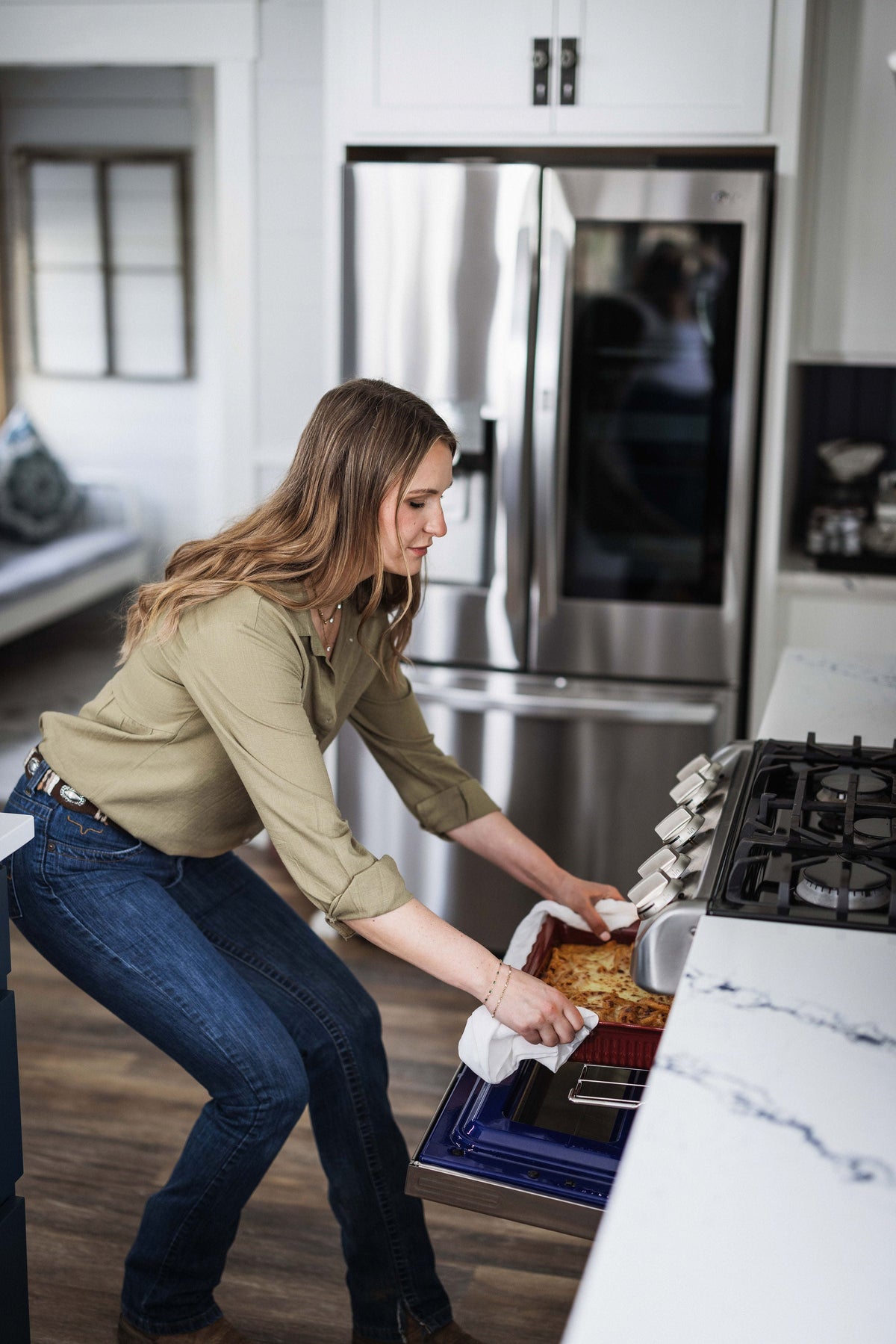
I cook three meals a day for my family. Breakfast, lunch, dinner — all of it. I also run a farm, work a full-time job, and have two kids who need me for approximately 47 things at any given moment.
So when someone tells me they "don't have time" to cook, I get it. I really do. But I also know it's less about time and more about systems. Cooking isn't about spending your whole Sunday in the kitchen or grinding your own flour (unless you want to — no judgment). It's about using real, whole ingredients instead of relying on boxes, bags, and frozen trays to feed your family.
This guide is everything I've learned about making food while juggling a life that never slows down. Whether you're just starting or you want to ditch more processed stuff from your kitchen, I'll walk you through the pantry setup, the strategies, and the mindset that makes it all work.
Table of Contents
-
What Does Cooking from Scratch Actually Mean?
-
Why I Cook from Scratch (And Why You Might Want To)
-
The Pantry Staples That Make It All Possible
-
Start Here — The Easiest Swaps to Make First
-
How to Plan a Week of Recipes from Scratch
-
Time-Saving Strategies for Making Food from Scratch
-
Essential Cooking Techniques Every Beginner Needs
-
Cooking from Scratch with Kids Underfoot
-
The Stuff I Still Don't Make from Scratch (And That's Fine)
-
FAQ
-
About the Author
What Does Cooking from Scratch Actually Mean?
There's no official rulebook for this. Cooking from scratch generally means you're starting with whole, basic ingredients — raw produce, proteins, grains, herbs, and pantry staples like flour and butter — instead of relying on pre-packaged, pre-seasoned, or pre-made convenience foods.
But here's my honest take: it's a spectrum, not a pass-or-fail test.
|
Level |
What It Looks Like |
Example |
|
Full scratch |
Every component made by hand from raw ingredients |
Homemade pasta with sauce from fresh tomatoes you grew yourself |
|
Mostly scratch |
Base ingredients are whole, maybe one shortcut |
Homemade chili with canned beans and canned tomatoes |
|
Semi-scratch |
A mix of homemade and store-bought components |
Homemade meatballs with jarred marinara over boxed pasta |
|
Convenience |
Mostly pre-made, assembled at home |
Frozen meal heated and plated |
Most of us live somewhere between "mostly scratch" and "semi-scratch," and that's perfectly fine. The goal isn't perfection. The goal is feeding your family real food without losing your mind.
Why I Cook from Scratch (And Why You Might Want To)
I'm not going to lecture you. I'll just tell you what I've noticed after years of cooking from scratch for my family.
You know exactly what's in the food. No mystery ingredients, no preservatives I can't pronounce, no hidden sugars. When I make my kids' dinner, I know every single thing that went into it.
It tastes better. I'm sorry, but it does. A homemade tomato sauce made with real garlic, fresh basil, and good olive oil doesn't compare to what comes out of a jar. Once you taste the difference, it's hard to go back.
It saves money over time. The upfront grocery run can feel expensive when you're stocking your pantry, but the cost per serving of a homemade meal is almost always less than takeout, frozen dinners, or convenience food. A bag of flour, a dozen eggs, and some butter can become biscuits, pancakes, pasta, pie crust, and gravy — all for a fraction of what those individual products cost pre-made.
It teaches your kids where food comes from. Growing up on a farm, my kids already see the connection between animals, the land, and the food on their plate. Cooking from scratch extends that lesson into the kitchen.
The Pantry Staples That Make It All Possible
You can't cook from scratch if your pantry is empty. The first step is getting it stocked with the basics. These are the ingredients I always have on hand — they cover breakfast, lunch, dinner, baking, and everything in between.
Dry Goods
|
Staple |
Why You Need It |
|
All-purpose flour |
Baking, thickening sauces, breading, making pasta |
|
Whole wheat flour |
Bread, pancakes, muffins |
|
White rice and brown rice |
Side dish staple for any protein |
|
Dried pasta (multiple shapes) |
Quick weeknight dinners |
|
Oats (rolled and quick) |
Breakfast, baking, granola |
|
Dried beans (pinto, black, kidney) |
Soups, chili, rice and beans, taco filling |
|
Cornmeal |
Cornbread, breading, polenta |
|
Sugar (white, brown, powdered) |
Baking, sauces, marinades |
|
Baking powder and baking soda |
Leavening for everything you bake |
|
Active dry yeast |
Bread, rolls, pizza dough |
Oils, Vinegars, and Liquids
|
Staple |
Why You Need It |
|
Olive oil |
Cooking, dressings, drizzling |
|
Vegetable or canola oil |
Frying, baking |
|
Butter (salted and unsalted) |
Everything — cooking, baking, flavor |
|
Apple cider vinegar |
Dressings, marinades, baking |
|
White vinegar |
Cleaning, pickling, baking |
|
Soy sauce |
Stir fry, marinades, flavor boost |
|
Chicken and beef broth |
Soups, rice, sauces, deglazing |
|
Honey |
Sweetener, marinades, baking |
Spices and Seasonings
You don't need 40 spices. Start with these and build from there:
|
Must-Have Spices |
Bonus Round (Add When Ready) |
|
Salt and black pepper |
Smoked paprika |
|
Garlic powder |
Cumin |
|
Onion powder |
Cayenne |
|
Italian seasoning |
Cinnamon |
|
Chili powder |
Nutmeg |
|
Paprika |
Dried mustard |
|
Red pepper flakes |
Bay leaves |
Fridge and Freezer Staples
-
Eggs (always)
-
Milk
-
Cheese (cheddar and parmesan cover most bases)
-
Fresh garlic and onions
-
Lemons
-
Frozen vegetables (peas, corn, green beans, broccoli)
-
Ground beef, chicken breasts, or whatever proteins your family eats
-
Tortillas (yes, I buy these — more on that later)
Start Here — The Easiest Swaps to Make First
If you're new to making food from scratch, don't try to overhaul your entire kitchen overnight. Start with the swaps that give you the biggest return on effort.
|
Instead of Buying... |
Make This from Scratch |
Effort Level |
Time |
|
Pancake mix |
Flour + eggs + milk + butter + leavening |
Easy |
5 min to mix |
|
Salad dressing |
Olive oil + vinegar + mustard + garlic + herbs |
Easy |
3 min |
|
Taco seasoning |
Chili powder + cumin + garlic powder + paprika + salt |
Easy |
2 min |
|
Cream of mushroom soup (for casseroles) |
Butter + flour + broth + mushrooms + cream |
Medium |
15 min |
|
Marinara sauce |
Canned tomatoes + garlic + olive oil + basil + salt |
Medium |
20–30 min |
|
Bread |
Flour + yeast + water + salt + butter |
Medium |
15 min active, 2–3 hrs rise/bake |
|
Ranch dressing |
Buttermilk + mayo + herbs + garlic |
Easy |
5 min |
|
Biscuits |
Flour + butter + milk + baking powder + salt |
Easy |
20 min total |
The spice blends and dressings are the lowest-effort, highest-impact starting point. You will never go back to buying taco seasoning packets once you make your own.
How to Plan a Week of Recipes from Scratch
Meal planning is the single biggest reason I'm able to cook three meals a day without it taking over my life. I plan on the weekend, shop once, and then execute all week without having to think about it.
Here's my approach:
Step 1 — Pick five dinners. I plan five dinners and leave two nights open for leftovers or something simple like eggs and toast. I rotate between categories: one chicken dish, one beef dish, one soup or stew, one pasta, one "whatever sounds good."
Step 2 — Work backwards for lunches and breakfasts. Lunches are almost always leftovers from the previous night's dinner, sandwiches, or something quick like quesadillas. Breakfasts rotate between eggs, oatmeal, pancakes, and biscuits.
Step 3 — Write the grocery list by ingredient, not by recipe. I group everything by section — produce, dairy, meat, pantry — so I'm not zigzagging around the store.
Step 4 — Prep what you can on Sunday. I chop onions, mince garlic, portion meat, wash and prep produce, and make a batch of something I can grab all week — like a pot of rice or a tray of biscuits.
Step 5 — Post the plan somewhere visible. Mine goes on the fridge. If I don't see it, I forget it. Lists keep me alive.
Time-Saving Strategies for Making Food from Scratch
This is where most people get stuck. They think cooking from scratch means standing at the stove for two hours every night. It doesn't. Here's what actually works:
Batch cook your bases. Make a big pot of rice, a batch of shredded chicken, or a large pot of beans on one day. Use them across multiple meals all week. Monday's shredded chicken becomes Tuesday's chicken tacos and Wednesday's chicken soup.
Double every recipe. If I'm making chili, I'm making a double batch. Half for tonight, half for the freezer. Future me always appreciates past me for this.
Embrace one-pot and sheet-pan meals. Fewer dishes, less cleanup, same scratch-cooked quality. A sheet pan with chicken thighs, potatoes, and vegetables roasted with olive oil and seasoning is a complete dinner with almost zero effort.
Prep ingredients, not full meals. Full "meal prep" where you cook five dinners on Sunday sounds great in theory. In practice, nobody wants to eat reheated chicken on Thursday. Instead, prep the building blocks — chopped vegetables, marinated proteins, cooked grains — and assemble fresh each night.
Use your slow cooker. Throw ingredients in before the morning chaos starts, come home to a finished dinner. Slow cookers were made for people who cook from scratch but don't have time to babysit the stove.
Keep your recipes simple. A good meal doesn't need 22 ingredients. Some of the best dinners I make have five or six ingredients. Complexity doesn't equal quality.
Essential Cooking Techniques Every Beginner Needs
You don't need culinary school. You need these basics:
Sautéing. Cooking food quickly in a small amount of oil over medium-high heat. This is how you start most dinners — sauté your onions and garlic, then build from there.
Roasting. Toss vegetables or meat with oil, salt, and pepper, spread on a sheet pan, and put in a hot oven (400–425°F). It's the simplest way to make anything taste good.
Making a roux. Equal parts butter and flour, cooked together for a minute, then liquid added gradually. This is the base of gravies, cream sauces, and cheese sauces. Learn this one technique and you can make dozens of recipes from scratch.
Braising. Brown meat on the stove, then cook it low and slow in liquid (broth, wine, tomatoes). This is how you turn cheap cuts into fall-apart-tender dinners.
Seasoning as you go. Taste your food while you're cooking and adjust salt, pepper, and acid (a squeeze of lemon or splash of vinegar) as needed. This is what separates flat food from food that actually tastes like something.
Reading the recipe all the way through. Do this before you start. Every time. I can't tell you how many times I've gotten halfway through a recipe only to realize I was supposed to marinate something for two hours or let dough rest overnight.
Cooking from Scratch with Kids Underfoot
I won't pretend this is easy. Cooking with small kids in the house is an extreme sport. But it's also how they learn. My kids have grown up watching me cook and now they want to help, which is chaotic and wonderful at the same time.
Give them a job. Even toddlers can wash vegetables, tear lettuce, or stir something in a bowl. It keeps them busy and makes them feel involved.
Cook during their best hours. I do my heaviest cooking when my kids are in a good mood — usually mid-morning for lunch prep and late afternoon for dinner. Trying to cook when they're melting down is a recipe for disaster (pun intended).
Make things they can eat with their hands. Kids eat better when the food is fun. Biscuits, quesadillas, meatballs, and anything they helped shape or roll are usually winners.
Accept the mess. Flour on the floor, eggshell in the batter, spills on the counter — it's all part of it. The mess cleans up. The memories stick.
The Stuff I Still Don't Make from Scratch (And That's Fine)
I'm not a purist. Here's what I still buy pre-made without a shred of guilt:
-
Tortillas. I've tried making them. The effort-to-reward ratio is not there for me on a weeknight.
-
Pasta (most of the time). Homemade pasta is a weekend project, not a Tuesday dinner move.
-
Condiments I barely use. If I go through a bottle of Worcestershire sauce once a year, I'm buying it.
-
Canned beans and tomatoes. These are whole foods that happen to come in a can. I use canned tomatoes in almost everything, and I don't feel bad about it. Dried beans are great if I remember to soak them. I usually don't.
-
Bread for sandwiches. I bake bread when I have time, but school-lunch bread comes from the store most weeks.
The point of cooking from scratch is to take control of your food, not to make yourself miserable. Be practical. Use shortcuts where they make sense. Put your energy into the meals and staples that actually make a difference.
FAQ
Is cooking from scratch actually cheaper than buying convenience food?
In most cases, yes. The initial grocery run to stock your pantry can feel expensive, but those staples — flour, rice, beans, spices, oil — last for weeks or months and produce dozens of meals. A homemade pot of soup costs a fraction of the canned or take-out version. The savings compound over time, especially for families cooking multiple meals a day.
How do I start cooking from scratch if I've never really cooked before?
Start with one meal. Pick something simple you already like eating — scrambled eggs, pasta with homemade sauce, a basic stir fry — and make it from whole ingredients. Master that, then add another recipe. Don't try to overhaul everything at once. Build skills gradually and let confidence follow.
What's the difference between "cooking from scratch" and "recipes from scratch"?
Cooking from scratch is the overall approach of using whole, basic ingredients to prepare meals. Recipes from scratch are the specific dishes you make using that approach. Basically, cooking from scratch is the philosophy, and recipes from scratch are the execution.
How do I cook from scratch when I work full time?
Meal planning and prep are everything. Spend 30 to 45 minutes on the weekend prepping ingredients — chopping vegetables, marinating meat, cooking a batch of grains. Use slow cookers on busy days. Keep meals simple during the week and save more involved recipes from scratch for the weekend. Structure and lists are what make it work.
What are the best first recipes from scratch for beginners?
Start with things that replace something you're currently buying pre-made. Homemade pancakes instead of a box mix. A simple vinaigrette instead of bottled dressing. Biscuits from flour, butter, and milk instead of a tube. These quick wins build momentum and show you how easy making food from scratch can actually be.
Can I cook from scratch if I don't have a lot of kitchen equipment?
Absolutely. You need a good knife, a cutting board, a couple of pots, a skillet, a baking sheet, and some measuring cups. That's genuinely it to start. Fancy gadgets are fun but they're not what makes food taste good. Whole ingredients and basic techniques do that.
About the Author
Becca Miller is a family and farming content creator from Nashville, Tennessee. When she's not wrangling her cows, miniature horses, or goats, she's cooking three meals a day for her family and sharing the chaos (and joy) of farm life with her 310,000+ TikTok followers and 366,000+ Facebook followers. She's a mom of two, a lifelong equestrian, and a firm believer that structure, routine, and a good list can get you through just about anything.
Follow Becca on TikTok | Instagram | Facebook