Let's be honest: packing a lunch your kid will actually eat can feel like a full-time job. You can put together the cutest, most balanced lunchbox, only to have it come home looking almost exactly the way it left. Sound familiar?
I can't guarantee these tips will work for every child, but they've worked well for us and have made school lunches feel a whole lot less stressful. My kids help plan and pack, I give them choices instead of asking one huge open-ended question, and we keep the whole process flexible.
One important note before we get into it: if your child has food allergies, feeding difficulties, or strong food or texture sensitivities, generic lunchbox ideas should never override their safe foods, school plan, or care-team guidance. Work within what is safe and comfortable for your child, and don't force these strategies.
This post may contain affiliate links. If you buy through one of these links, Becca may earn a commission at no additional cost to you.
1. Let Them Help Plan the Lunch

One of the easiest ways to get kids more interested in lunch is to let them have a say in what goes inside. That doesn't mean handing over the whole kitchen and asking, “What do you want?” It can be much simpler.
I like to guide the choices: What main food do you want? Which fruit or vegetable sounds good? What would you like to drink? What is one fun thing you'd like? A couple of options in each category keeps the decision manageable.
This is also where weekly planning helps. When you are already planning meals around what your family actually eats, it is easier to spot lunch options before a busy school morning. A leftover, accepted snack, or washed produce can save a lot of staring into the refrigerator.
Use a Simple Lunchbox Formula
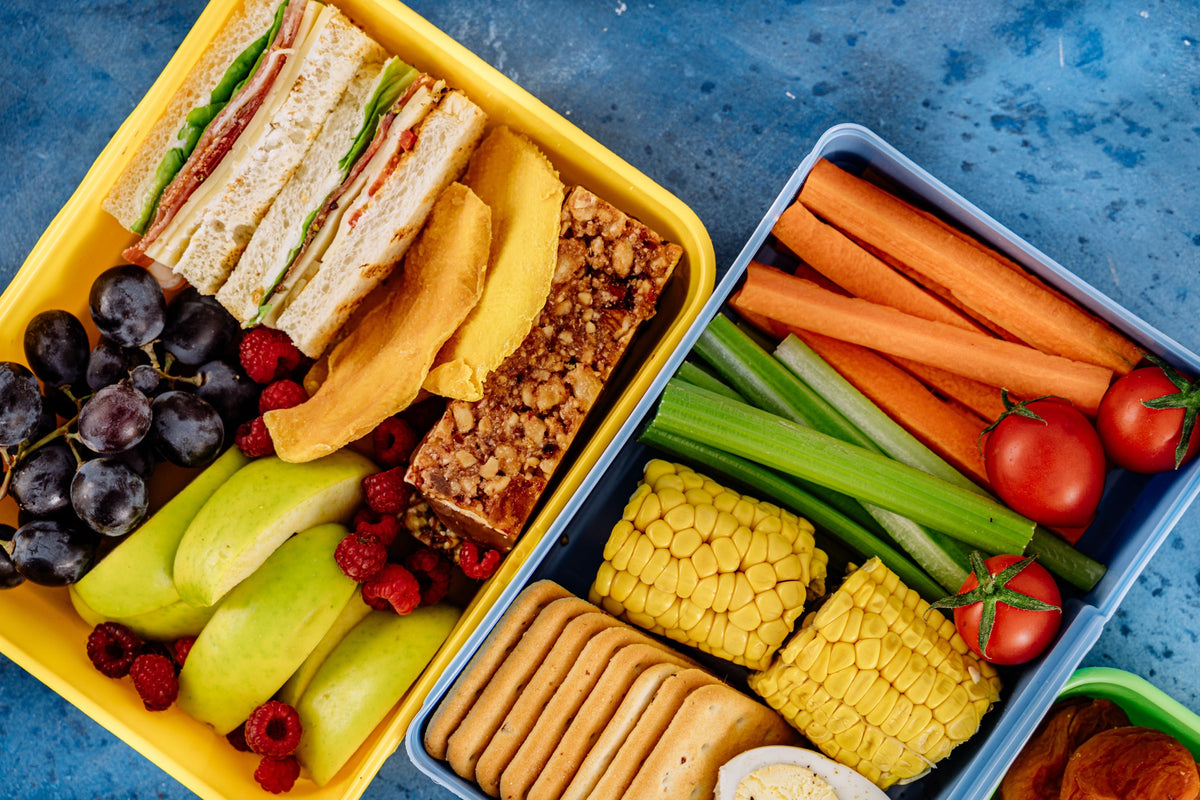
When I'm stuck on what to pack for school lunch, I use categories instead of trying to invent a brand-new meal. A flexible starting point might be:
- One familiar main or protein food
- One fruit or vegetable your child accepts
- One snack or side
- One drink
- One fun extra, when it makes sense
This is a planning shortcut, not a nutrition prescription. Convenience foods count. The USDA MyPlate guidance for selective eaters encourages offering choices and letting children help with food preparation. That is the heart of this approach: useful boundaries with room to participate.
2. Let Them Help Pack It
Once we've decided what they're having, I let my kids help pack. It can take longer, and things do not always end up where I would put them. But they practice making decisions and age-appropriate kitchen tasks, and I see how much food feels manageable to them.
Helping might mean washing fruit, filling compartments, adding a napkin, or putting containers into the lunch bag. Cutting and other kitchen tasks should match the child's skills and have the supervision they need.
Helping does not guarantee they will eat everything. It simply gives them some ownership and makes lunch feel less like a surprise somebody else assembled for them.
Do a Quick Open-It-Yourself Test
Before the lunchbox goes to school, ask your child to open it. Can they unzip the bag, lift the lid, open the packaging, and manage the utensils? A great lunch is not useful if eating time disappears while they struggle with a lid.
If something is hard to open at home, switch the container, loosen the lid when safe, or choose another option. That tiny test can reveal a problem you would not see from the food alone.
3. Make It Easy—and a Little Fun
You do not need a Pinterest-perfect lunch every morning. One small touch can make an ordinary lunch feel special without creating another job for you.
Colorful containers, silicone cups, simple shapes, or fun food picks can help. Letting a child choose the lunchbox for the day can be enough. For kids who prefer foods not to touch, a divided container can also make the meal easier to understand and manage.
If that setup fits your child, these divided snack containers are one neutral option for keeping foods separate.

A container cannot make a child eat; it may simply make packing and opening lunch easier.
Fun Does Not Have to Mean Perfect
Small or manageable servings can feel less overwhelming, and you can always pack more of an accepted food when your child needs it. A dip, a colorful cup, or a quick shape can add interest, but none of it is required.
The goal is not to perform for the lunchbox. Pick the touch that takes ten seconds, skip it on a rushed morning, and move on. Y'all, some days getting the lunch into the backpack is the victory.
4. Make It Personal
This is probably my favorite part: I put a little note in my kids' lunchboxes. Sometimes it is as simple as “I love you.” Other days it is a silly joke, a quick drawing, or something I know will make them smile.
They are away from me for a big part of their day, so I love giving them that small reminder that I am thinking about them. It adds connection without putting any pressure on the food.
You can also watch me pack school lunches for a real-life look at the task. Lunch packing can be practical and still feel like a little labor of love.
5. Pack the Practical Things
Sometimes the problem is not the food. It is everything your child needs to actually eat it.
Before the lunchbox closes, check for:
- A napkin
- The right fork or spoon
- Any school-appropriate hand-cleaning item they can use safely
- Containers and packages they can open
- Anything else that particular meal requires
It sounds obvious, but a forgotten spoon can turn a perfectly good lunch into something your child cannot manage. I like to think through the meal from opening the bag to putting it away again.
How to Keep a School Lunch Cold
For perishable food, use a soft-sided insulated lunch bag and place at least two cold sources around the food, following USDA Food Safety and Inspection Service guidance. If the school provides refrigeration, follow its process rather than assuming when it is available.
What About a Hot Lunch?
USDA advises using a clean insulated container for hot food. Preheat the container with boiling water, empty it, add the hot food, and keep it closed until lunchtime. An adult should handle boiling water, and the container must be something the child can safely open and manage at school.
Temperature control is one place where cute does not matter. Pack the food so it stays safe first, then add the fun part.
6. Give Them a Conversation Starter
This one is completely optional, but it is something I have done with my kids that I really love. Especially for a child who feels shy, a few inexpensive stickers can give them an easy way to start an interaction with the kids sitting nearby.
“Do you want a sticker?” is a much easier opening than trying to think of the perfect thing to say. These inexpensive animal stickers are one optional supply for that idea.

Check the school's rules first, and never treat the stickers like a promise that a friendship will happen. They are simply a low-pressure icebreaker.
7. Use What Comes Home as Feedback
Finally, do not make lunch a battle. Some days nearly everything disappears; other days, most of it comes home. That does not mean the lunch was wrong—or that you failed.
Returned food is information. Maybe lunch was rushed, a lid was difficult, the food changed texture, or the portion looked like too much. The American Academy of Pediatrics recommends avoiding pressure, punishment, and food battles while offering variety alongside accepted foods.
Ask Neutral Questions
Instead of “Why didn't you eat this?” try questions that help you solve the next lunch:
- Did you have enough time?
- Was anything hard to open?
- Was the food still cold or warm enough?
- Did it feel like too much?
- Is there something you would swap tomorrow?
You do not need to change five things at once. Change one part, watch what comes back, and learn from it.
Keep Food Low-Pressure
When practical, include at least one food your child already accepts. If you add something unfamiliar, place it alongside familiar food without requiring a bite. The CDC's guidance for selective eaters supports involving children and paying attention to age-appropriate food shapes and textures.
Choice is helpful. Pressure, bribery, and punishment can make lunch a bigger struggle. We are teaching kids to feed themselves, notice what they like, and build practical skills over time. It will not look perfect every day.
Know When Generic Advice Does Not Fit
Allergies, feeding difficulties, strong sensory needs, swallowing concerns, or growth concerns are not problems to solve with a cute lunchbox trick. Stay within your child's safe foods and established plans, follow school allergen policies, and bring specific concerns to the qualified professionals already involved in their care.
Frequently Asked Questions
What is the best way to pack kids' lunches?
The best approach is a repeatable one: start with foods your child accepts, offer a few useful choices, and let them help pack. Use portions, containers, and packaging they can manage independently, then add the napkin or utensils the meal requires. Keep perishable food safely cold with an insulated bag and at least two cold sources. A simple lunch your child can open and feels comfortable eating is more useful than a picture-perfect one.
Can I pack my kids' lunch the night before?
Yes. Prepare and refrigerate the lunch overnight when that is appropriate for the foods you are packing. In the morning, move it into an insulated bag with the cold sources needed to keep perishable items safe; overnight refrigeration does not keep food cold through the school morning by itself. Pairing grocery planning and prep ahead can also make the evening routine easier.
What to pack a 7 year old for lunch?
Pack foods that particular child accepts, can safely chew, and can open and manage without more help than the school can provide. There is no universal amount that fits every 7-year-old, so use your child's appetite and established guidance rather than a one-size-fits-all portion. Check the school's rules, and follow the child's allergy or care plan when one applies.
What can I put in a packed lunch instead of a sandwich?
Try an accepted main food such as leftovers in a suitable container, cheese and crackers, a wrap, pasta, yogurt with sides, or another familiar option your child can manage. Apply cold- or hot-holding guidance based on the food rather than assuming every alternative packs the same way. Browse Becca's family recipe ideas for more inspiration, then adapt the idea to your child's preferences and school setup.
What not to pack in a kids lunch box?
Avoid food that cannot be kept at a safe temperature until lunch, packages the child cannot open, and food shapes or textures that are not age-appropriate for that child. Do not pack anything prohibited by the school's allergen rules or the child's individual plan. There is no universal banned-food list for every lunchbox; safety, manageability, and the child's needs matter more than a generic rule.
A Lunch They Eat Is the Win
The goal is not the most nutritionally perfect or photogenic lunchbox every single day. It is a safe, manageable lunch that keeps food positive and gives your child some practice making choices.
Give them a say. Let them help. Add the note or the silly sticker when you have time. Then use what comes home to make one small adjustment instead of rebuilding the whole routine.
At the end of the day, a lunch your child actually eats will always beat the perfect lunch that comes home untouched. If they helped choose it, packed it, and made it their own, I would call that a win.